System Guides
Installing Solar Panels on Factory Roofs: Lifting Equipment, Access and Safety
Factory roofs are high, large and fragile. This guide covers how installers plan access, choose a solar panel ladder lift, and move panels, inverters and batteries onto industrial roofs safely.
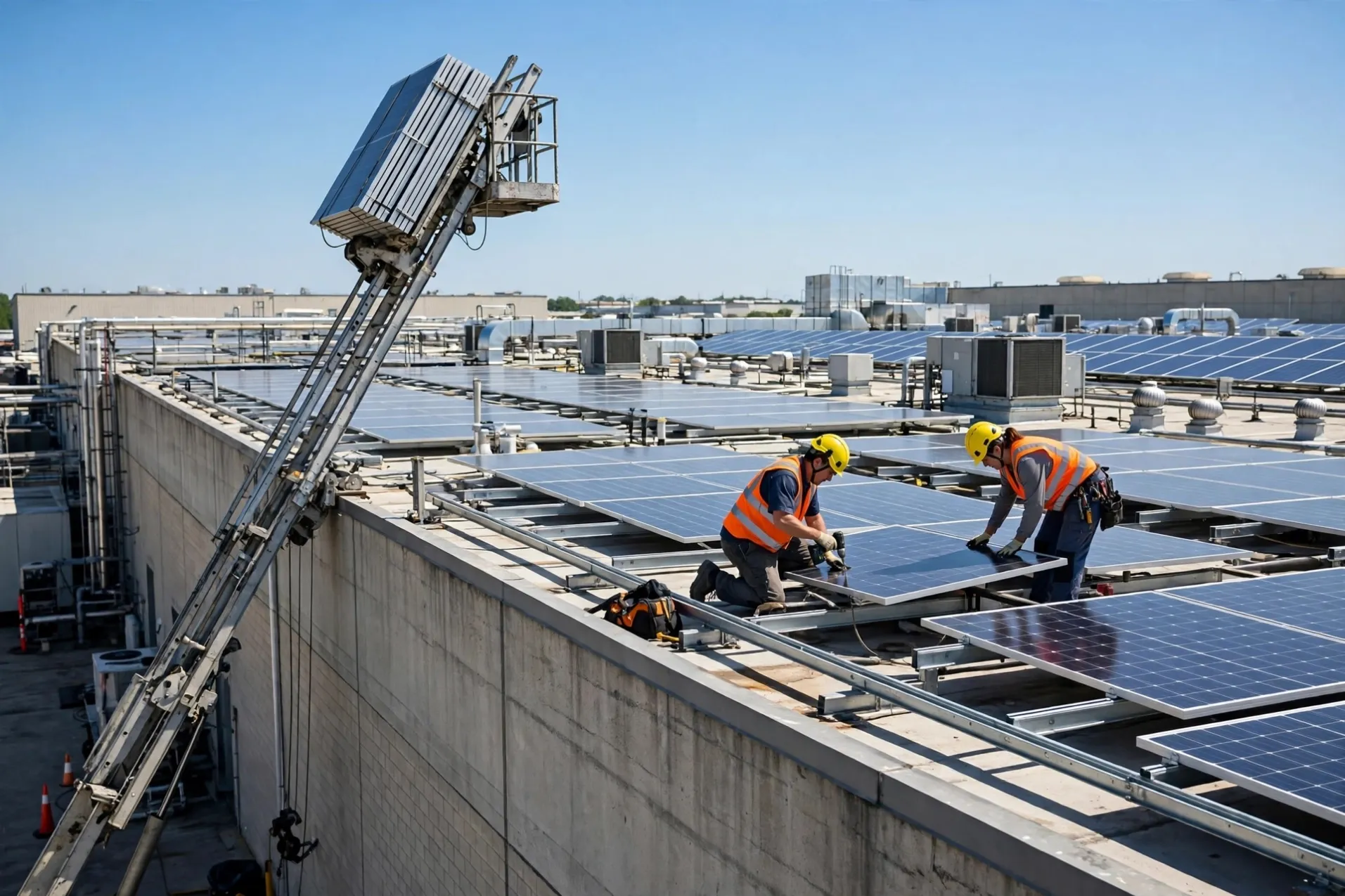
A factory roof is not a big house roof. Industrial buildings are taller, their roofs are often lightweight steel sheet that cannot take point loads, and a single project can mean thousands of panels plus string inverters, combiner boxes and battery cabinets — all of which have to get up there somehow. The electrical design of a commercial rooftop system gets most of the attention, but on site, the job is won or lost on access and lifting.
This guide is written for EPCs and installation teams: how factory rooftop solar installation actually works, and how to choose the lifting equipment for it.
Why Factory Roofs Are a Different Job
Three things change when you move from residential to industrial rooftop PV:
- Height. Eaves of 8–15 m are normal for warehouses and production halls, and parapets add more. Lifting gear that works for a two-storey house simply does not reach.
- Volume. A 500 kW project uses roughly a thousand large-format panels. Carrying them up one by one — by rope, scaffold or crane basket — is slow, expensive and hard on both panels and workers.
- Roof surface. Sandwich panels and thin metal decking dent easily and may not allow workers to stage materials on the roof. Loads need to arrive at the edge, in a controlled way, and be distributed immediately.
Step 1: Survey the Roof Before You Quote the Lift
A short site survey prevents most problems:
- Measure the true lifting height — ground to roof edge, including parapet and any slope.
- Check where a lift can stand: firm, level ground along the facade, clear of truck routes and overhead lines.
- Note the roof covering. Weight-sensitive roofs favour lightweight equipment and a platform that delivers panels right at the edge.
- Count the loads: panels per day, plus inverters, mounting rails and batteries that also need to go up.
Step 2: Choose the Right Solar Panel Hoist
For repeated vertical transport, a ladder lift (inclined hoist) is the standard tool: a rail track leans against the building, and a powered platform carries materials up the track. Two families cover most factory work:
Galvanized steel ladder lifts are the heavy-duty option for tall industrial buildings. Our galvanized steel ladder lifts run from 5 m to 25 m, carry up to 300 kg on the shorter models and 200 kg on the 15–25 m models, and come in auto-turn, manual-flip and inclined-roof versions to match different roof edges. The track is built from 2 m sections, so the same lift can be reconfigured from a warehouse wall to a higher production hall.
Aluminium ladder lifts are the choice when weight and roof protection matter. The Aluminium Ladder Lift 250 kg with adjustable 20°–45° bend follows the roof slope and delivers panels flat onto the roof surface; the 200 kg fixed-angle model suits simpler, standard roof edges. Both run up to 19 m, are IP54-rated for outdoor work, and can be operated by wired or wireless remote control.
As a rule of thumb: steel for maximum height and daily heavy use, aluminium for lighter handling and delicate roofs.
Step 3: Don't Forget Ground Handling
Panels are only half the load. Inverters and battery cabinets are heavy, awkward and easy to damage. On the ground and inside the warehouse, portable mini forklifts rated at 300 kg move palletised panels and lift battery cabinets into position without a full-size forklift — useful where the factory's own forklift is busy or the workspace is tight.
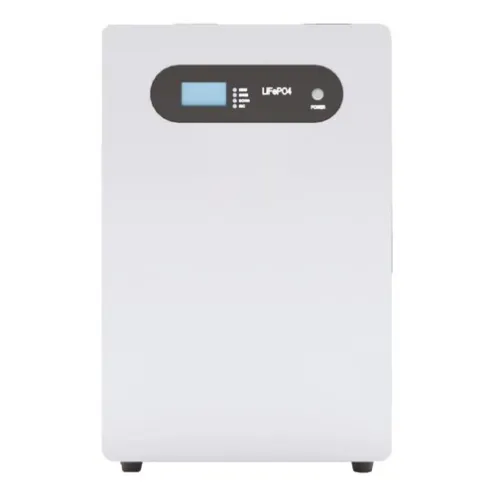
Where the project includes storage, factory roofs pair naturally with commercial batteries: daytime solar covers the production load, and stored energy shaves the evening peak. Our energy storage batteries range from 5.12 kWh to 16.08 kWh LiFePO4 units that can be combined for larger systems.
Step 4: Safety and Workflow on the Day
- Set the lift on firm ground and check the track angle against the manufacturer's range before the first load.
- Never exceed the platform's rated load — panels plus packaging add up faster than crews expect.
- Keep a banksman at the roof edge; the operator's remote control should have a clear line of sight.
- Stage panels on the mounting structure or load-spread boards, never directly on thin sheeting.
- Stop lifting in high wind; large panels act as sails.
The Payoff
Crews that switch from manual carrying or crane hire to a dedicated ladder lift typically cut the material-handling share of an installation dramatically — and the same lift then serves the next project, and the next. For EPCs quoting factory rooftop work in high-tariff markets such as the Philippines, Southeast Asia, South Africa or Europe, owning the access equipment turns a recurring rental cost into a one-time investment.
Planning a factory rooftop project? Send us the roof height and panel count, and we will recommend the lift configuration that fits — get a quote