System Guides
Solar in Typhoon & Hurricane Zones: 5 Costly Mistakes to Avoid
Five costly mistakes when installing solar in typhoon and hurricane regions — mismatched systems, cheap mounting, permits, battery cycle life, after-sales. Examples: Philippines, Vietnam, Caribbean.
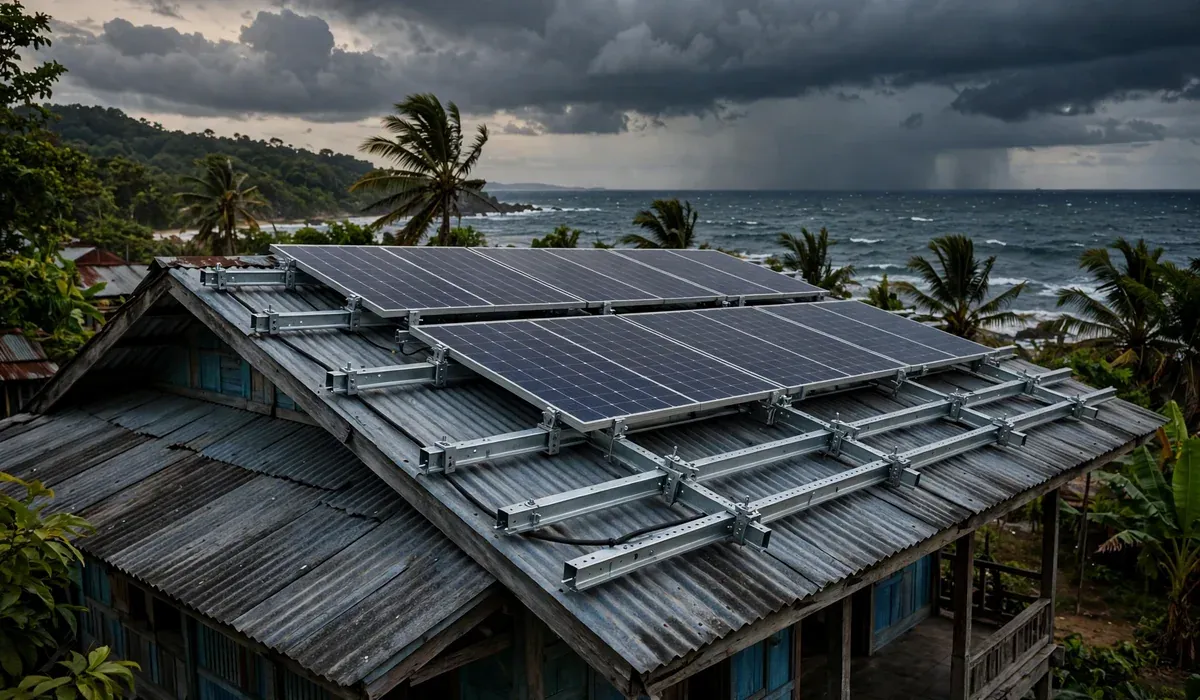
Solar panels survive storms. Bad systems don't.
The Philippines sees about 20 tropical cyclones enter its area of responsibility every year, and 8 or 9 of them make landfall (PAGASA). Vietnam's central coast faces typhoons most years. Across the Caribbean, hurricane season runs June to November. In all of these places, solar is growing fast — and so are the expensive lessons.
The panels themselves are rarely the problem. The five mistakes below are where the money is lost. Step into any one of them and the system costs more over its life than the "cheap" quote ever saved.
Mistake 1: Buying the panel brand, not the system match
A good panel on a mismatched system still underperforms. An inverter that does not fit the array, cables sized too thin, a mounting set that does not suit the roof — any one of these caps generation below what the panels could deliver.
Solar is a system, and the weakest link sets the ceiling. Before comparing brands, check the match: inverter capacity against array size, cable sizing and voltage drop over the actual run length, and mounting specified for the roof type and the local wind zone. A system quoted as one matched set is worth more than a list of good parts that were never designed to work together.
Mistake 2: Cheap mounting in a typhoon zone
In the Philippines, typhoons are not a once-in-a-decade event — they come every year. A thin-wall mounting set that saves a little money upfront can fail in a single big storm. What was saved on the rack comes back as a rebuild, repair labour, and weeks of lost generation.
Mounting is the cheapest part of a system to upgrade and the most expensive to replace after a storm. Ask for the wind-load rating, the rail thickness, the clamp count, and corrosion protection — galvanized steel, not bare metal — and confirm the set complies with the local wind code for the installation area. In a storm region, the mount is not where you save money.
Mistake 3: Install first, permits later
The system goes up, and only then does someone discover the grid connection needs approval, or the roof structure needs verification. The proper order is approval first, installation second. Reversed, the choices are rework or a fine — and in some areas a system cannot be connected at all until the paperwork clears.
Before a single rail is fixed, confirm three things: the grid application and its timeline, whether the roof structure needs a check or a calculation, and which local permits apply. A supplier who walks through this sequence with you before quoting an install date is worth more than one who promises the fastest install.
Mistake 4: Comparing batteries on capacity, not cycle life
A 10 kWh battery rated for 500 cycles and a 10 kWh battery rated for 5,000 cycles are two different products. For an off-grid system, the number that matters is cost per kWh over the battery's life — not the capacity printed on the label.
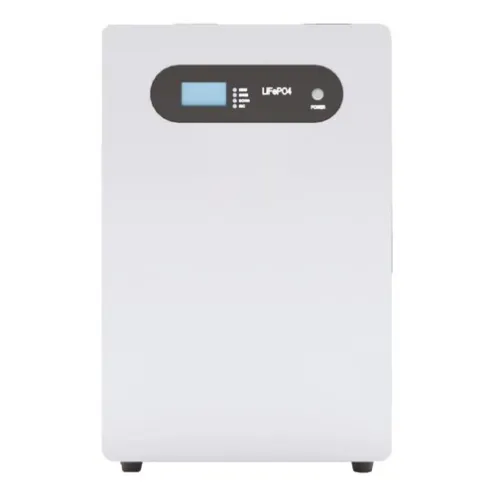
Ask for cycle life at a stated depth of discharge, the warranty in years, and the throughput the warranty actually covers. As a benchmark, a LiFePO4 home battery should be rated for at least 8,000 cycles to 70% state of health with a 10-year warranty. Never order on nameplate capacity alone.
Mistake 5: No local after-sales or spare parts
Solar is a 20-year-plus asset. If the supplier has no local service capability and no spare-parts stock, one failed inverter can mean months waiting for sea freight — while the system sits idle on the roof.
Before ordering, ask two questions: who repairs it when it breaks, and how long do spares take to arrive. A supplier with local service and stocked parts is part of the system price, not an extra.
The one line to remember
Buy solar as 20-year infrastructure, not as an appliance to compare on sticker price. In a typhoon or hurricane region, that means: a matched system, mounting rated for the wind, permits before installation, batteries judged on cycle life, and a supplier who can still be reached in year ten.
Five questions to ask any supplier
- Is the inverter, cable and mounting matched to this array and this roof?
- What is the mounting's wind-load rating, and does it meet the local wind code?
- What is the permit and grid-application sequence — and its timeline?
- What is the battery's cycle life at a stated depth of discharge, and what does the warranty cover?
- Who repairs the system locally, and where are spare parts stocked?